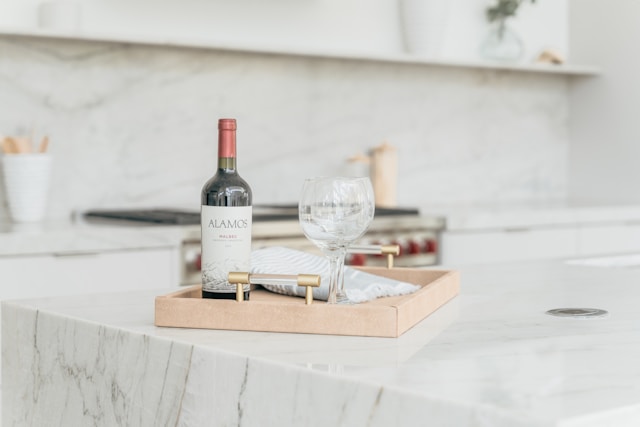
Marble Backsplash Tile: The Design Choice That Can Transform an Ordinary Kitchen
A kitchen backsplash may cover only a modest part of the room, yet it sits in one of the most visible positions. It stretches between the countertop and upper cabinets, surrounds the range, frames windows, and often catches the eye the moment someone enters the kitchen.
That is why choosing a marble backsplash tile is not simply a matter of finding a pleasant white stone. The tile must work with the countertop, cabinetry, flooring, hardware, lighting, and scale of the space. It also needs to tolerate cooking splashes, moisture, cleaning, and daily use.
Get the decision right, and the backsplash can bring the entire kitchen together.
Get it wrong, and even an expensive material may feel disconnected, too busy, too cold, or unnecessarily difficult to maintain.
The appeal of marble lies partly in its uncertainty. Each piece carries different veining, mineral markings, and tonal shifts. A backsplash created from natural stone will never look exactly like a printed image or showroom display. For some homeowners, that variation is the reason to choose it. For others, it can be an unexpected complication.
“I want character, but I don’t want chaos,” is a common concern during material selection.
Fortunately, those goals are not contradictory. The secret is choosing the right marble, pattern, finish, and grout—and understanding how they will behave together before installation begins.
Why Marble Works So Well on a Kitchen Backsplash
Marble has a visual depth that manufactured materials often attempt to imitate. Light interacts with the stone rather than merely reflecting from its surface. Fine veins appear delicate from a distance, while larger mineral movements become more noticeable as you approach.
A marble backsplash tile can also adapt to very different interiors.
In a traditional kitchen, marble complements paneled cabinetry, warm wood, aged brass, and decorative molding. In a minimalist space, a pale honed marble can introduce natural movement without disturbing the clean architecture. Dark marble works beautifully in moody kitchens with walnut cabinets or painted finishes. Multicolored mosaics can bring warmth and pattern to a room that would otherwise feel too restrained.
The material does not dictate one particular style.
Format has an equally important role. A simple rectangular tile feels different from a basketweave mosaic. A checkerboard design creates stronger rhythm. Hexagons appear structured yet decorative. Herringbone introduces movement, while small square mosaics can feel classic, tailored, or slightly nostalgic depending on the stone combination.
This range makes marble remarkably flexible, but it also creates more opportunities to make the wrong choice.
Start With the Countertop, Not the Backsplash
One of the most practical rules in kitchen design is to select the countertop before the backsplash. The countertop occupies a larger visual area, costs more to replace, and usually offers fewer opportunities for adjustment after fabrication.
A backsplash should respond to it.
If the countertop has dramatic veining, the wall tile may need to be quieter. If the countertop is nearly solid, a patterned marble backsplash tile can add movement and personality.
Consider two realistic scenarios.
Scenario One: Strongly Veined Countertop
Imagine a countertop with bold gray and gold movement. It already functions as a focal point. Adding an intricate marble mosaic with several colors could make the kitchen feel crowded.
A better approach might be a softly veined honed tile in a color taken from the countertop background. The backsplash would still contain natural variation, but it would allow the countertop to remain dominant.
Scenario Two: Plain White Quartz
Now imagine a kitchen with simple white quartz, flat-front cream cabinets, light oak flooring, and brass hardware. The room is calm, perhaps even a little too calm.
Here, a Calacatta Gold mosaic, basketweave design, or warm geometric pattern could give the kitchen identity. The natural veining would prevent the white surfaces from feeling flat, while gold or beige tones could connect with the wood and metal finishes.
The lesson is simple: do not select each material as though it belongs to a separate room.
Bring samples together. Place the backsplash tile directly against the countertop, cabinet finish, and hardware. The most beautiful tile in isolation is not necessarily the best tile for the finished kitchen.
Choosing the Right Marble Color
Many homeowners begin by asking whether they should choose Carrara or Calacatta. That is a useful starting point, but the available palette extends far beyond two famous white marbles.
Surfaces Galore offers natural stone choices that include pale white and gray varieties, warm cream marbles, dramatic black stone, brown Emperador tones, green marble, checkerboard combinations, and mixed-stone mosaics. These options make it possible to build a backsplash around the actual color story of the kitchen rather than defaulting automatically to white.
White and Gray Marble
White marble remains popular because it reflects light and works with many cabinet colors. Carrara typically creates a softer, more relaxed impression, while Calacatta varieties often show a lighter background and more pronounced movement.
A white marble backsplash tile can work especially well in kitchens with:
• Navy, green, gray, black, or natural wood cabinetry
• Stainless steel or nickel fixtures
• White, gray, or lightly patterned countertops
• Limited natural light
• A desire for a bright but not completely plain wall surface
However, white is never just white. Some stones lean blue-gray, others cream, silver, or warm beige. Artificial lighting can amplify these undertones.
A cool white marble under warm lighting may suddenly appear slightly yellow. A cream-toned stone beside a blue-white cabinet may look darker than expected. This is why physical samples matter.
Cream and Brown Marble
Cream marble can make a kitchen feel warmer and more settled. Crema Marfil, for example, works naturally with beige countertops, medium or dark wood cabinets, bronze fixtures, and earthy flooring.
Combinations that include Emperador Light and Emperador Dark bring stronger contrast and richer brown tones. A polished Spanish-style mosaic using cream and brown marble may suit a traditional kitchen, bar area, or Mediterranean-inspired interior particularly well.
The effect is less icy than white marble and often more forgiving in a room with warm materials.
Black Marble
Black marble creates drama, especially when marked by crisp white veining. It can provide contrast behind light cabinets or continue the mood of a kitchen built around black, charcoal, walnut, or deep green finishes.
But a dark backsplash absorbs more light. In a small kitchen with few windows, covering every wall in black marble may make the room feel enclosed.
A compromise often works better. Use the dark marble behind the range, inside a framed feature area, or across a compact beverage station. Surround it with quieter materials.
Green and Red Marble
Green and burgundy stone are not neutral choices—and that is precisely their strength.
A green mosaic can look exceptional beside walnut, unlacquered brass, cream paint, or soapstone-style counters. Deep red marble may bring richness to a dining bar, butler’s pantry, or traditional kitchen.
These stones should usually be treated as intentional design statements. They are not background materials. Their color needs to be repeated or acknowledged elsewhere through paint, textiles, artwork, hardware, or furniture.
Large Tile or Marble Mosaic?
Both options can create an attractive backsplash, but they produce very different results.
Large marble tiles show longer sections of veining and create fewer grout lines. They often feel calmer and more architectural. They can be a good choice when the countertop already has movement or when the kitchen design depends on simplicity.
Mosaics create more detail.
When browsing marble mosaic tile for sale, you may encounter small squares, hexagons, basketweave patterns, herringbone layouts, checkerboards, mixed-stone compositions, and decorative designs. Each shape changes the rhythm of the wall.
Small mosaics can disguise irregular wall dimensions because the pieces are easier to adjust around outlets, corners, and cabinet edges. On the other hand, they require more grout and careful installation.
When a Mosaic Makes Sense
A mosaic may be the better choice when:
• The countertop is understated
• The kitchen needs a focal point
• The backsplash area is relatively small
• You want to combine several stone colors
• The design includes curves, niches, or complicated cuts
• You prefer a crafted, detailed appearance
When a Larger Format Works Better
Choose larger tile when:
• The room already contains several patterns
• You want fewer grout joints
• The marble’s long veining is the main attraction
• The kitchen has a modern, minimal layout
• You want the wall and countertop to feel visually connected
There is also a third option: combine formats.
For example, use rectangular marble tile throughout the kitchen and place a mosaic panel behind the range. A slim marble molding can frame the panel and give it a deliberate architectural boundary.
This creates interest without allowing the pattern to dominate every wall.
Polished Versus Honed Marble Backsplash Tile
Finish can change the personality of the same stone.
Polished Finish
Polished marble has a glossy surface that reflects light and makes colors appear deeper. In a darker kitchen, this reflection can be beneficial. It can also make a backsplash feel more formal and luxurious.
Grease marks, fingerprints, water spots, and etching may be easier to notice on a reflective surface. That does not make polished marble unsuitable for kitchens, but it does mean the owner should understand the maintenance requirements.
Honed Finish
Honed marble has a matte or satin-like surface. It usually feels softer, quieter, and more contemporary. Minor etching may be less visually obvious because the surface is not highly reflective.
A honed marble backsplash tile pairs well with natural wood, handmade cabinetry, matte metals, and restrained interiors. It can also reduce glare beneath strong under-cabinet lighting.
Tumbled Finish
Tumbled marble has worn-looking edges and a textured surface. It can feel aged, rustic, or European. This finish works particularly well in traditional kitchens, country homes, and interiors designed to develop a patina.
The texture may hold grout haze or cooking residue more readily than a smooth finish, so sealing and cleaning procedures deserve careful consideration.
Grout Color Can Change the Pattern Completely
Grout is one of the smallest purchases in a kitchen renovation, yet it has enormous influence over the final appearance.
A grout color close to the marble background allows the stone to read as a continuous surface. A contrasting grout emphasizes every edge and makes the pattern more graphic.
Suppose you install a white hexagonal marble mosaic.
With pale grout, the wall appears soft and almost continuous. With medium gray grout, each hexagon becomes clearly defined. With dark grout, the backsplash turns into a high-contrast geometric statement.
The tile has not changed. The design has.
Before making a final decision, create a grout sample board. Use spare pieces of the actual marble and apply two or three possible grout colors. Observe the samples after the grout has fully cured.
Do not rely only on a printed grout chart. The surrounding stone affects how the color is perceived.
It is also important to confirm compatibility between the grout and natural marble. Highly pigmented materials may affect porous stone, and abrasive grout can scratch some polished surfaces. The product specifications and installer’s experience should guide the choice.
The Reality of Stains, Etching, and Maintenance
Marble is a natural calcium-based stone. Acidic substances can react with its surface. Lemon juice, vinegar, tomato sauce, wine, and certain household cleaners may cause etching.
Etching is not always a dark stain. It may appear as a dull patch where the surface finish has changed.
This sounds alarming, but location matters. A vertical backsplash does not experience the same level of exposure as a countertop. Most spills can be wiped away before they remain on the surface for long.
Sealing may help reduce absorption and provide more time to clean splashes, but it does not make marble immune to acid.
A practical maintenance routine includes:
• Wiping cooking splashes promptly
• Using a pH-neutral cleaner suitable for natural stone
• Avoiding vinegar and aggressive bathroom cleaners
• Following the sealer manufacturer’s recommendations
• Testing any new cleaning product in an inconspicuous area
• Cleaning textured grout lines with a soft brush rather than an abrasive pad
Some homeowners want the backsplash to remain pristine indefinitely. Others accept small changes as part of the stone’s aging process.
Neither attitude is wrong. The important point is to choose a material that matches your tolerance for patina.
“Will marble look exactly the same in ten years?” is not the most useful question.
A better question is: “Will I appreciate how natural stone changes as the kitchen is used?”
Installation Details That Separate Good Work From Great Work
An expensive marble backsplash tile can still look disappointing when installed carelessly.
Natural stone requires thoughtful layout. Veining, sheet transitions, outlet positions, corner cuts, and pattern alignment must be planned before adhesive touches the wall.
Inspect and Blend the Material
Open several boxes before installation. Lay the pieces out and examine their color range.
Do not install one carton at a time. If one box happens to contain darker stone, the finished wall may develop an obvious block of color. Mixing pieces from multiple cartons distributes variation more naturally.
Plan the Starting Point
The installer should identify the most visible area and determine where full tiles should appear. Narrow cuts beneath cabinets or beside a window may look awkward.
Behind the range, center the pattern on the appliance or hood rather than beginning automatically from the nearest wall.
Watch for Mosaic Sheet Lines
Mesh-mounted mosaic sheets can sometimes reveal their rectangular boundaries after installation. This happens when the space between sheets differs from the joints within each sheet.
A skilled installer may adjust individual mosaic pieces along the edges to disguise the transition.
Use Suitable Setting Materials
Light marble may show shadows or discoloration if installed with an inappropriate dark adhesive. Setting materials should be selected specifically for natural stone and the installation environment.
The wall must also be flat. Mosaic tile follows the substrate, so bumps and dips can create uneven reflections and misaligned joints.
Should the Backsplash Continue to the Ceiling?
Extending marble beyond the usual space beneath the cabinets can make the kitchen feel more custom.
A full-height backsplash works particularly well around a range hood, open shelves, or a window without upper cabinets. It allows the veining or mosaic pattern to become part of the architecture rather than a narrow decorative strip.
However, the larger surface increases both cost and visual intensity.
A busy mosaic that looks attractive across eighteen inches may feel overwhelming when continued to an eight- or nine-foot ceiling. Before committing, photograph the wall and create a rough digital mock-up. Even a simple repeated image can reveal whether the pattern will feel balanced.
Full-height marble usually works best when at least one of these conditions is present:
• The pattern is relatively restrained
• The room has high ceilings
• Cabinetry and countertops are simple
• The marble is intended to be the main focal point
• The wall is interrupted by a window, hood, or shelving
Can the Same Mosaic Be Used in the Bathroom?
Many homeowners want continuity between the kitchen and nearby bathrooms. A mosaic selected for a backsplash may also appear around a vanity, inside a shower niche, or on a bathroom wall.
Using the same product as a marble shower floor tile requires more caution.
A tile that performs well vertically is not automatically ideal underfoot. Surface finish, mosaic size, grout-joint frequency, and slip resistance all matter. Polished marble that looks excellent behind a kitchen range may feel too slippery on a wet shower floor.
Always confirm the recommended applications before ordering material for multiple rooms.
A practical compromise is to use the same marble in different formats. The polished mosaic might appear on the kitchen wall, while a honed small-format version of the same stone is selected for the shower floor.
The rooms remain connected without ignoring their different functional needs.
How Much Marble Should You Order?
Do not calculate the backsplash area and order that exact quantity.
Extra tile is needed for cuts, breakage, pattern matching, color selection, and future repairs. Intricate mosaics or diagonal layouts may require more overage than a simple rectangular installation.
Measure all backsplash sections carefully and subtract only large openings. Small outlet and switch areas usually do not justify reducing the order because the surrounding tile still needs to be cut.
Keep several unused pieces after the project is complete. Natural stone batches vary, and finding an exact match years later may be difficult.
The installer should review the measurements and layout before the order is placed.
What to Check When Buying Marble Online
Shopping online gives access to a much larger variety of stone than many local showrooms can display. It also requires careful comparison.
When evaluating a marble mosaic tile for sale or larger backsplash format, check:
• The stone name and color range
• Finish type
• Individual tile and sheet dimensions
• Coverage per carton
• Thickness
• Recommended applications
• Edge treatment
• Current inventory
• Sample availability
• Shipping procedures
• Return conditions
• Whether trim or coordinating pieces are available
Product photography is useful, but screens display color differently. Order a sample whenever possible and examine it in the actual kitchen.
Place the sample vertically, not flat on a table. Backsplash lighting hits the stone differently than overhead showroom light.
View it in the morning, afternoon, and evening. Turn on the under-cabinet lights. Hold it beside the countertop. Move it next to the cabinet door.
This small test can prevent an expensive disappointment.
Final Recommendation: Let the Marble Support the Whole Kitchen
A successful backsplash is not necessarily the loudest or most expensive one. It is the surface that makes every surrounding decision feel more intentional.
Choose a marble backsplash tile by considering the entire kitchen rather than the tile alone. Begin with the countertop and cabinet colors. Decide whether the backsplash should provide contrast or calmness. Compare finishes. Test grout. Review the pattern at full scale. Plan the installation around focal points, outlets, windows, and corners.
Accept that natural marble includes variation. One piece may carry a bold vein, while another appears almost quiet. That difference creates depth and prevents the wall from looking mass-produced.
At the same time, remain practical. Marble can etch. It requires suitable cleaners. Some finishes show marks more readily than others. Detailed mosaics demand a capable installer, and complex patterns usually require extra material.
These are not reasons to avoid marble. They are reasons to make the decision with open eyes.
When the stone, pattern, finish, grout, and surrounding materials are chosen thoughtfully, the backsplash becomes more than protection for a kitchen wall. It becomes the element that connects the room—subtle enough to live with every day, yet distinctive enough to be remembered.